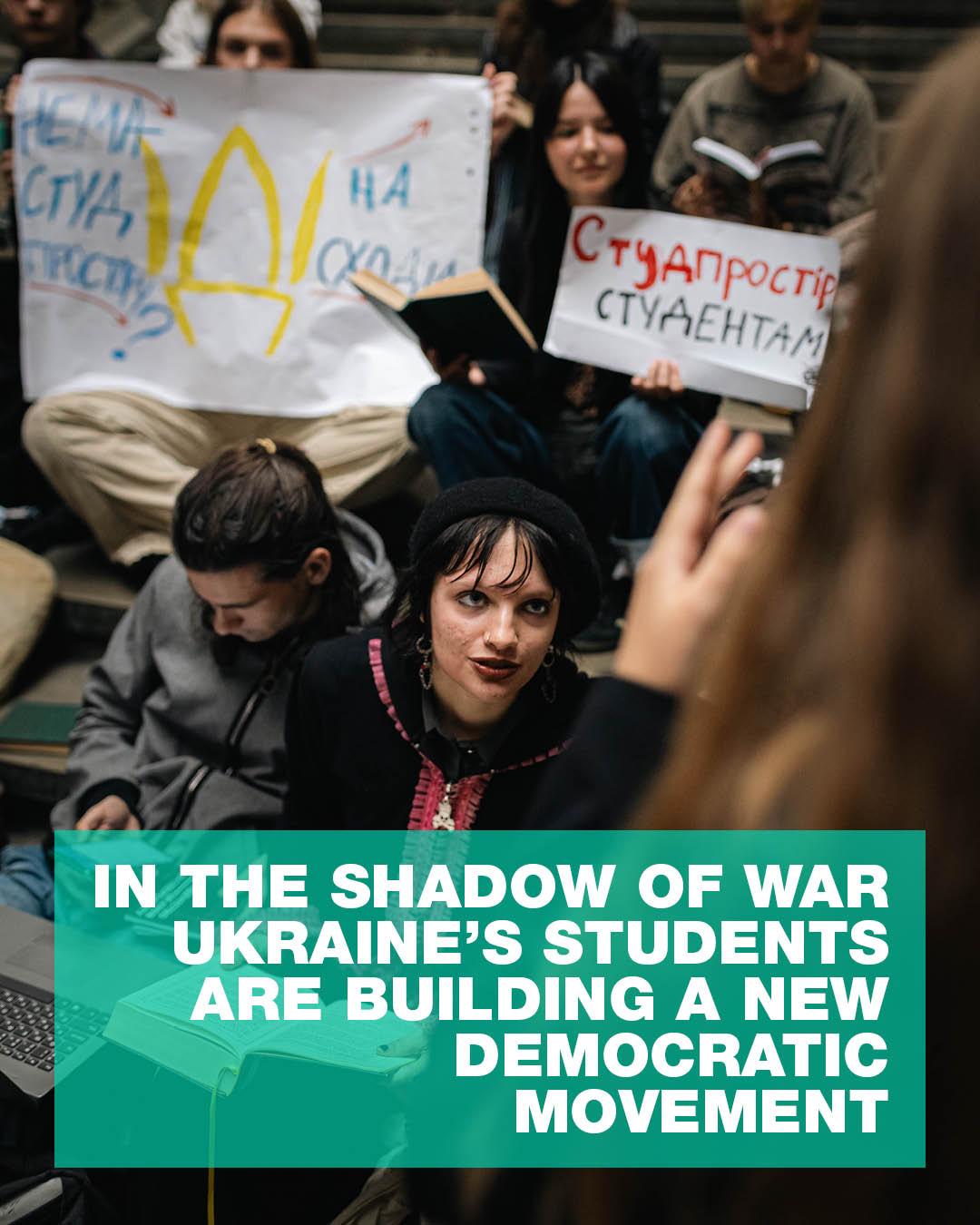
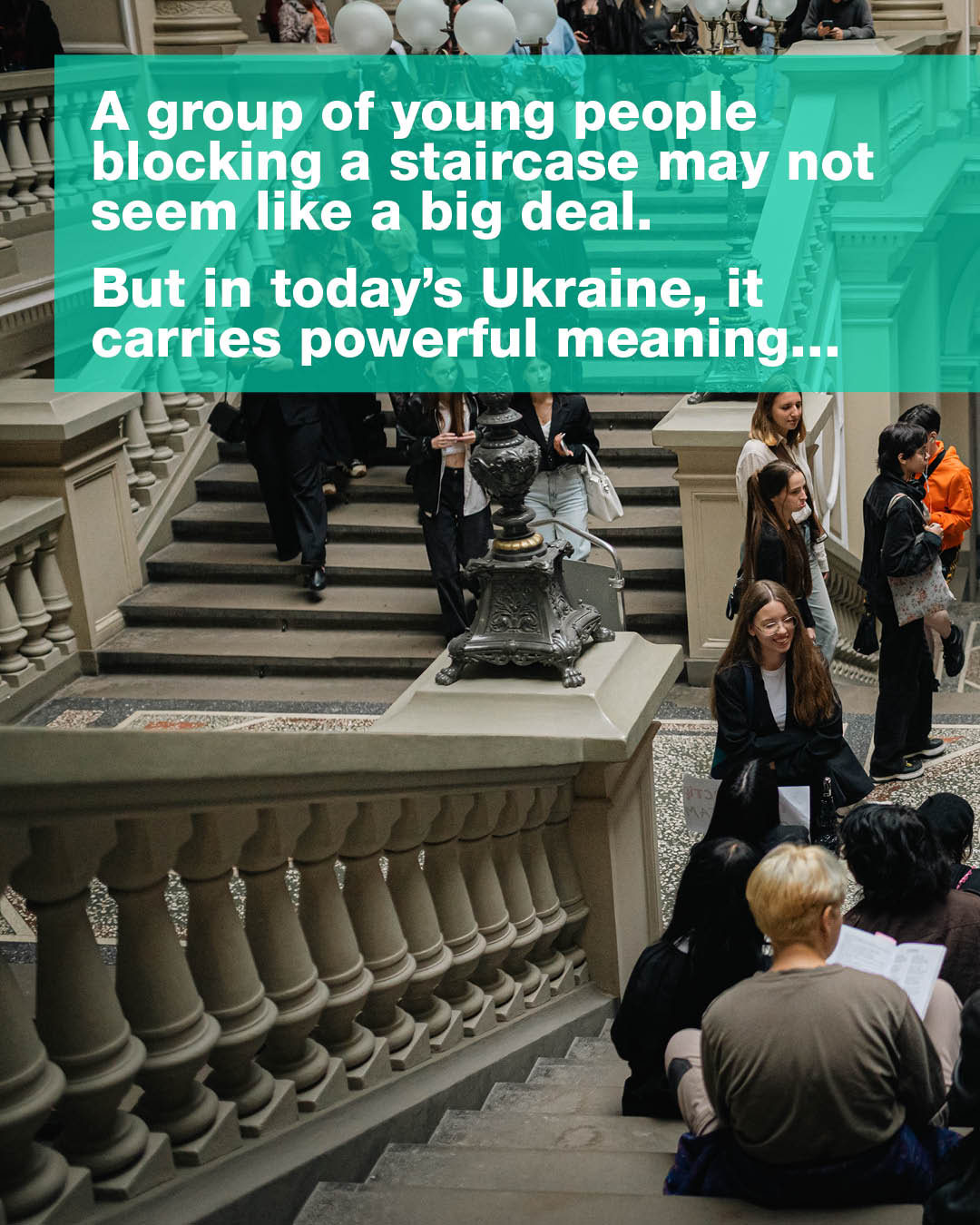
The main staircase at one of Lviv’s largest universities is almost entirely occupied by a group of students quietly reading their books. They hold signs with messages about better conditions for students, while curious young people stop to ask about the action. Some staff shake their heads or ask them to move, while a few teachers discreetly lean in to praise their initiative and offer words of support.
The peaceful action is organized by the student group Pryama Diia, which means “Direct Action.” They have occupied the staircase out of frustration with the lack of student facilities; many students are forced to stand outside in the cold between classes, without a proper place to study, meet, or stay warm. They believe a common student space should be a basic element of university life, and they are tired of the lack of response.
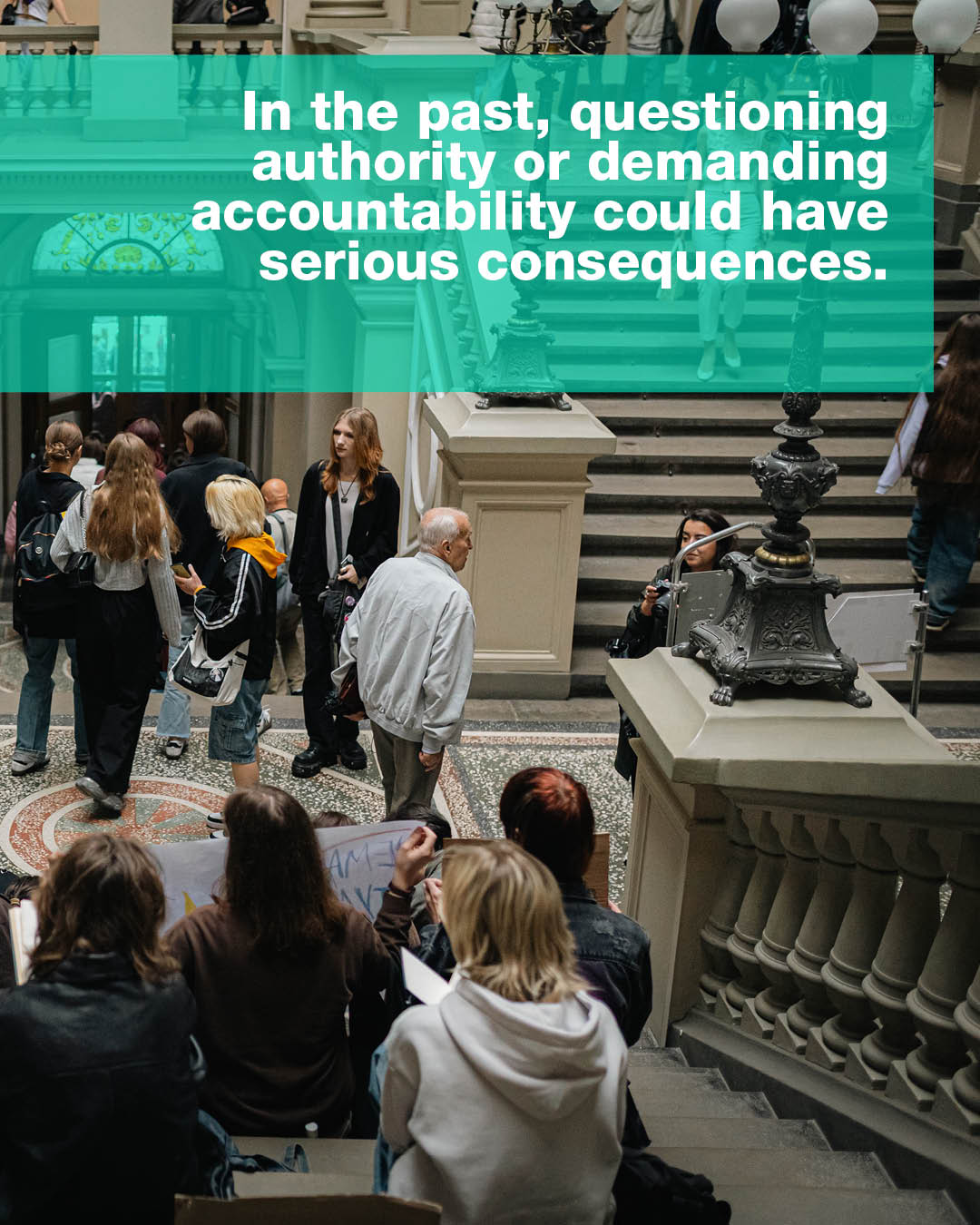
Behind this public protest lies a deeper story: During the Soviet era, civic engagement was not just unusual—it was dangerous. Generations of Ukrainians grew up under authoritarian rule, where questioning authority or demanding accountability could have serious consequences. “Ukraine has a long history of oppression and corruption,” says Jana, one of the members of Pryama Diia, explaining how her parents’ and grandparents’ generations learned to survive by staying silent. People were raised not to challenge those in power or organize collectively.
The war with Russia has changed this. Instead of silencing young people, it has awakened a strong desire to strengthen Ukraine’s democratic future. “Because we have a war, should we just die in our beds and do nothing?” asks Sonia, rejecting the idea that wartime makes civic engagement irrelevant. She emphasizes that the government often uses the war as an excuse to ignore citizens’ needs: “It’s a really good excuse to not give a damn about your citizens and do nothing.”
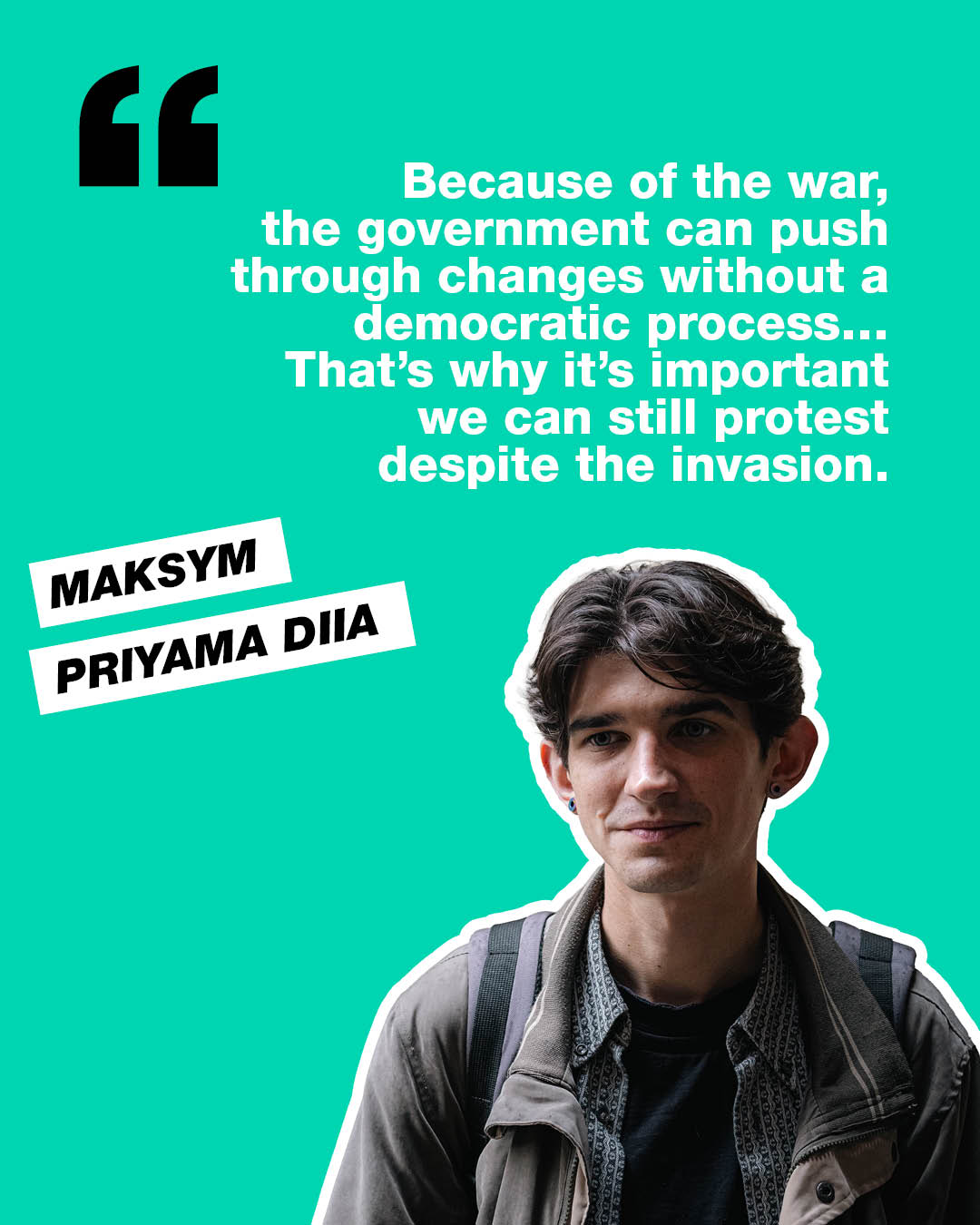
Maksym agrees and warns that the state of emergency may strengthen authoritarian tendencies. He sees their activism as a defense of democracy at a time when civil liberties can easily be eroded: “Because of the war, the government can push through changes without a democratic process… that’s why it’s important we can still protest despite the invasion.”
This is why student activism has taken on new meaning. In Lviv—a city roughly the size of Copenhagen in western Ukraine—members of Pryama Diia are fighting for a student common room, safer dormitories, and greater transparency in university governance. Their campaigns give young people a chance to practice civic engagement and democracy in real life. Since repression prevented previous generations from challenging the system, today’s youth must learn civic participation entirely from scratch. Student activism is their training ground.
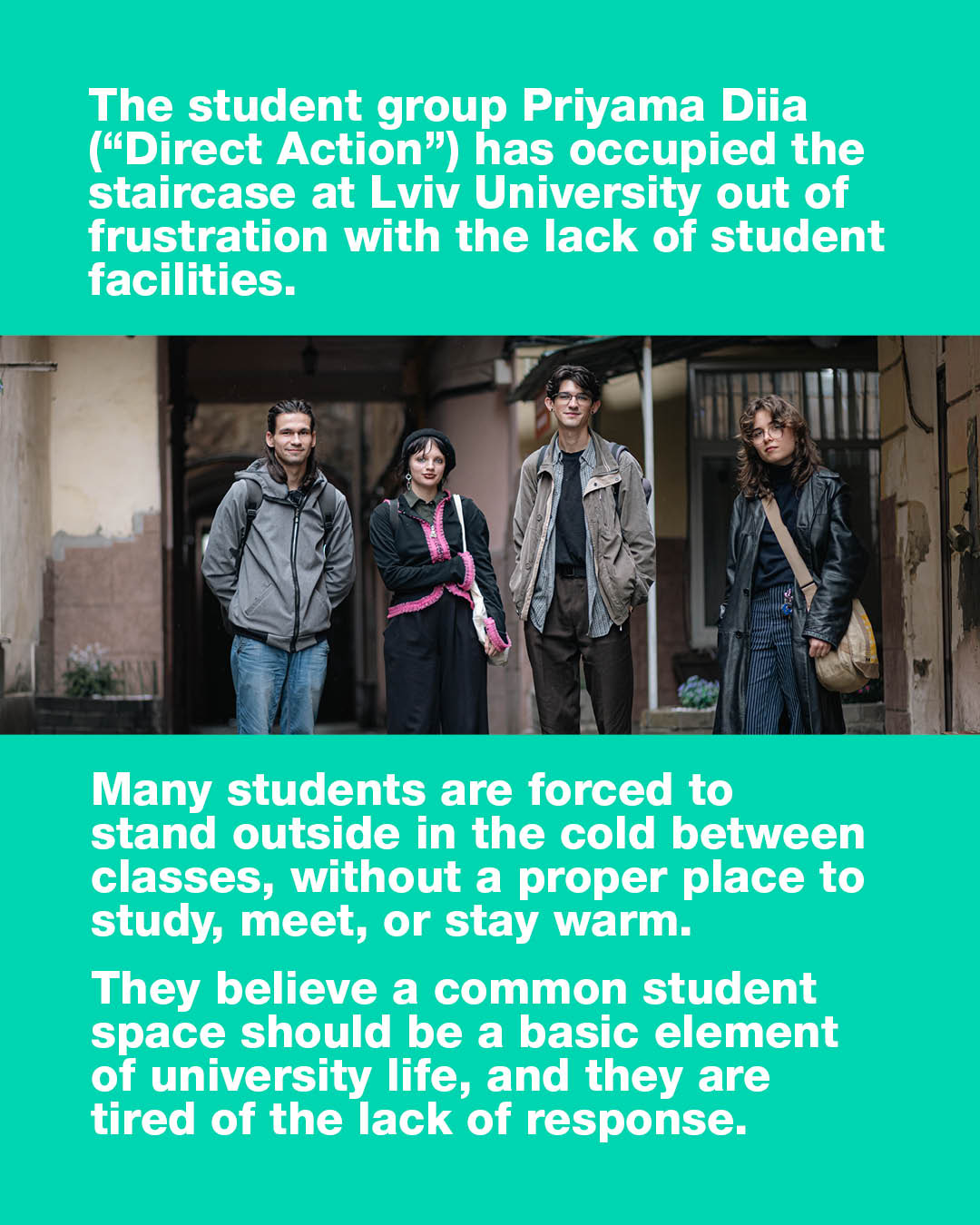
ActionAid Denmark supports Pryama Diia and other social movements with training and organizational development to strengthen grassroots democracy and civic participation in Ukraine. “The campaign we are running now is a direct result of the training we received,” explains Sonia. “We learned how to structure the campaign, share responsibilities, and mobilize people.” The training also strengthened their sense of community and transformed previously passive students into active organizers.
To a passerby, a group of young people reading on a staircase may look like an ordinary scene. But in today’s Ukraine, it is a powerful symbol. It shows a generation taking responsibility and building a democratic society from the ground up—something earlier generations were denied.
As Kristina from Pryama Diia puts it, they now dare to believe in a future where Ukraine’s youth “understand their rights, practice solidarity, and believe they can change the world around them—just a little bit.”
On this staircase, in this small protest, the future of a free and democratic Ukraine is taking shape.